
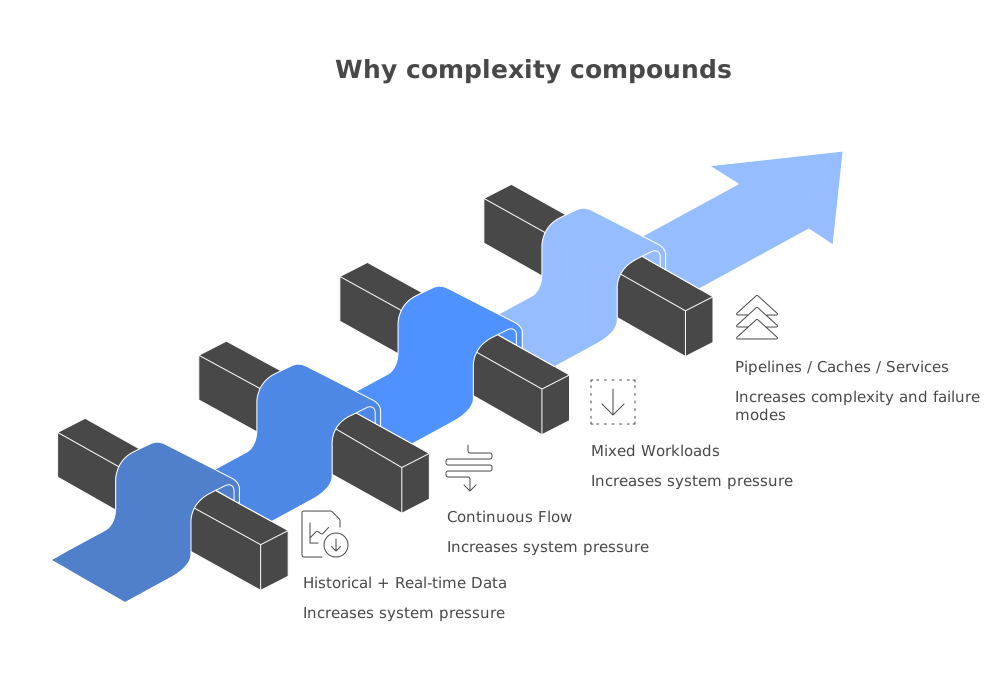
You have to handle both historical and real-time data
What used to run separately now lives in the same system—and stretches your original design.
Data doesn’t stop coming, and new sources keep showing up
More data can improve decision-making, but it puts constant pressure on ingestion, storage, and access.
You run multiple workloads on the same data
You ingest, query, and analyze simultaneously. What helps one workload degrades the others.
Your stack grows to keep up
You add pipelines, caches, and services to handle the load. Each one adds coordination, copies, and new failure modes.
What it can look like, in the wild
Sensor fusion across heterogenous systems
Historical data and real-time streams follow different rules. They update at different frequencies, live in different systems, and you end up merging them at query time or through pipelines.
Data lag, everywhere
Data arrives late, out of order, and out of sync across systems. You compensate, debug, and work around it. Worst, your stack introduces lag instead of eliminating it.
The Epic Query Split
From simple lookups to complex OLAP queries to full analytical workflows. The system handles some well, struggles with others, and the behavior becomes unpredictable.
The problem isn't scale. It's mismatch.
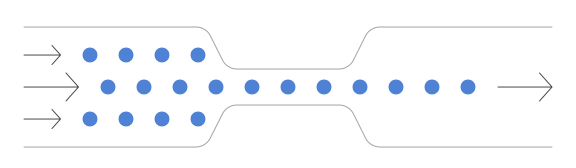
Where the complexity comes from
You are, for example, using a stack built for reporting to run continuous, mixed workloads.
What the stack must deliver
- Work on historical and real-time data together
- Keep data queryable while it continues to flow in
- Support multiple workloads without piling on extra components
- Stay stable under sustained pressure
Want to learn more?
Discover
Learn what is Quasar and how it may help you
Read
Case studies for a deep dive on how business overcame data architecture challenges
Learn
One of the differentiating aspects of Quasar, is its compression
Get the Quasar technical overview
[hubspot portal=”4295653″ id=”82c58acd-2aa3-484b-954c-3c9f5f316a8b” type=”form”]